There Is Still No Official EU Digital Product Passport Registry — Here’s What Manufacturers Need to Know
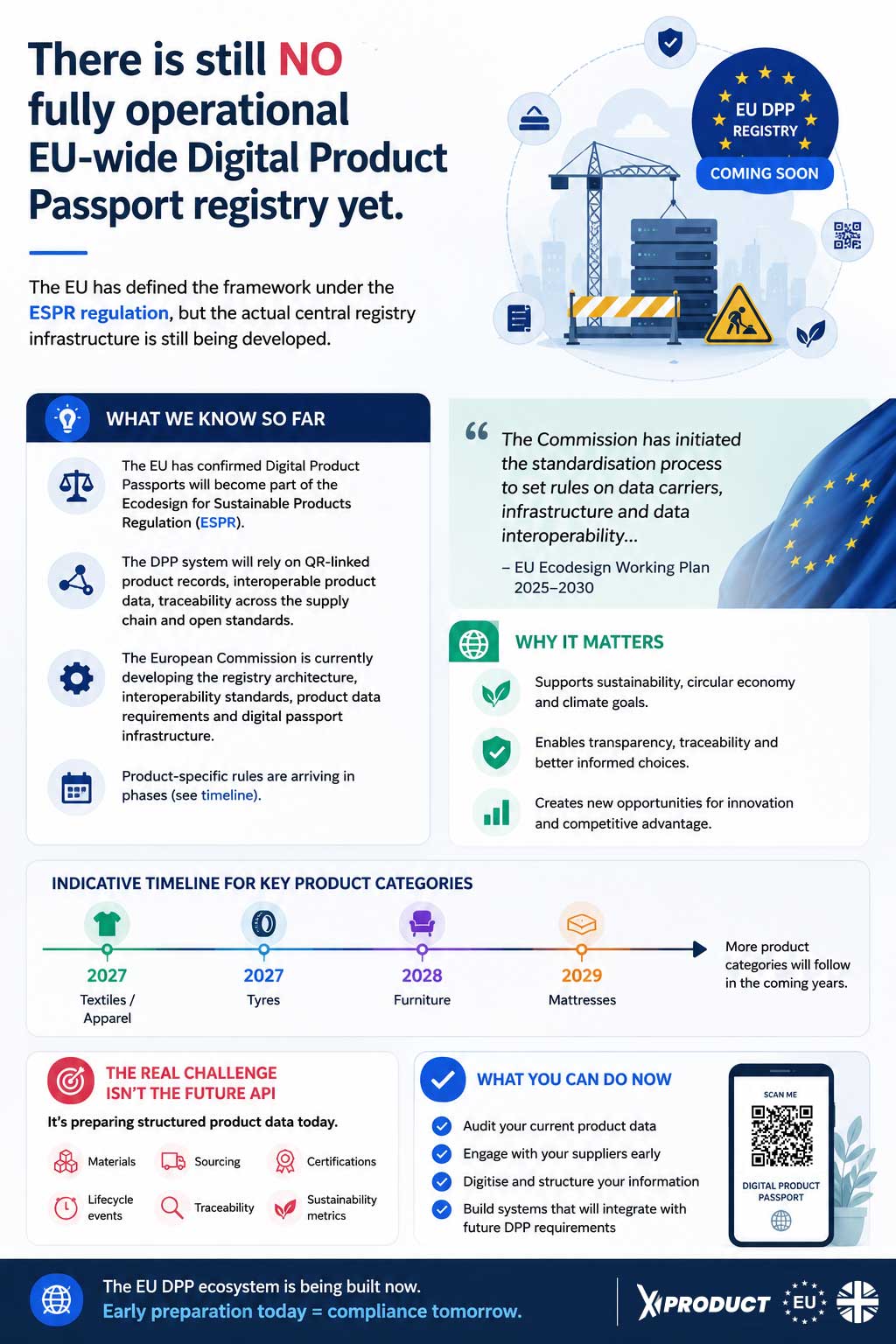
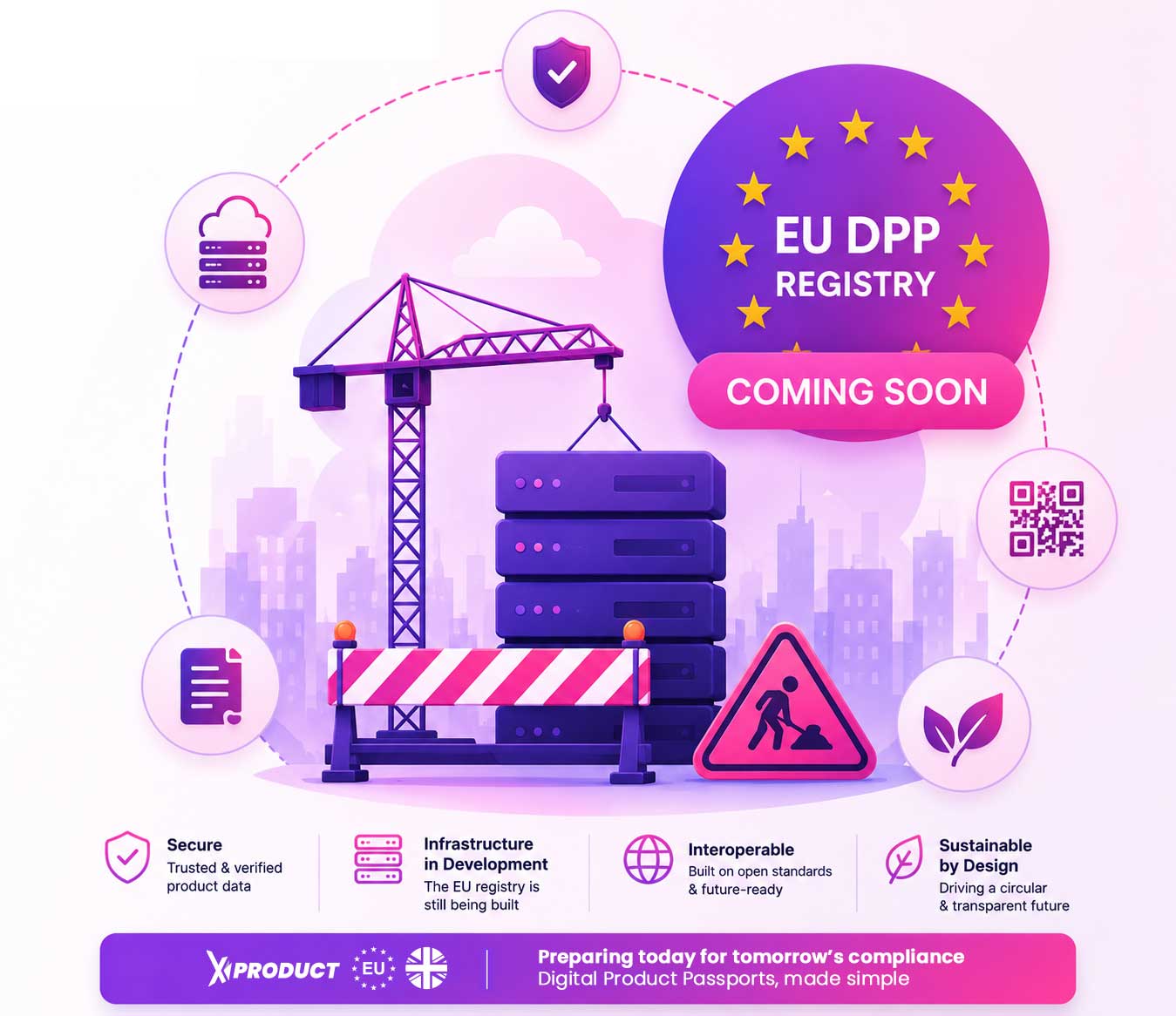
Right now, there is NO fully operational public EU-wide Digital Product Passport (DPP) registry available for manufacturers or software providers.
While the European Union has formally introduced the Ecodesign for Sustainable Products Regulation (ESPR) framework, the central infrastructure required to support Digital Product Passports is still being developed.
This is one of the biggest misconceptions surrounding DPP compliance today.
Many businesses assume there is already:
- A live EU product passport database
- An official API for integrations
- A public registration platform
- Mandatory onboarding processes
At this stage, these systems are still under construction.
What Exists Today?
The EU has already:
- Approved the ESPR regulation
- Defined the Digital Product Passport direction
- Confirmed QR-linked product transparency requirements
- Started developing delegated acts for product sectors
- Begun work on interoperability and registry architecture
However, the actual operational registry infrastructure is not yet publicly available.
What Will the Future EU DPP Registry Likely Include?
The future infrastructure is expected to support:
- Product identification
- Passport references
- QR-linked access
- Data interoperability
- Compliance verification
- Secure data exchange
- Integration APIs
- Registry authentication
The final implementation details are still evolving.
Why Manufacturers Should Still Prepare Now
Even without the official registry being live, manufacturers can already begin preparing by:
- Organising product data
- Structuring sustainability information
- Collecting supplier documentation
- Tracking materials and lifecycle events
- Generating QR-linked product pages
- Preparing for interoperability requirements
The hardest part of DPP readiness is usually not the final regulation — it is preparing clean and structured product data.
How xProduct Helps
At xProduct, we are building practical tools to help manufacturers prepare early for Digital Product Passport requirements without enterprise-level complexity.
Our platform already supports:
- QR-linked Digital Product Passports
- Product Information Management (PIM)
- Sustainability data
- Traceability workflows
- Public passport pages
- Scan analytics
- Blockchain-anchored verification
As the EU infrastructure evolves, manufacturers that start preparing now will be in a much stronger position later.
Final Thoughts
The EU DPP ecosystem is moving quickly — but the central registry infrastructure is still being built.
That means now is the ideal time for manufacturers to focus on data readiness, product transparency, and scalable digital workflows before compliance deadlines arrive.