
New EU Rules Tackle Destruction of Unsold Clothing and Shoes
The European Commission has adopted a landmark update to the Ecodesign for Sustainable Products Regulation (ESPR) that will put an end to the common practice of destroying unsold clothing, footwear, and accessories across the European Union. This move supports the EU’s broader transition to a circular economy and marks one of the most significant regulatory steps yet to curb textile waste and environmental harm.
Why These Rules Matter
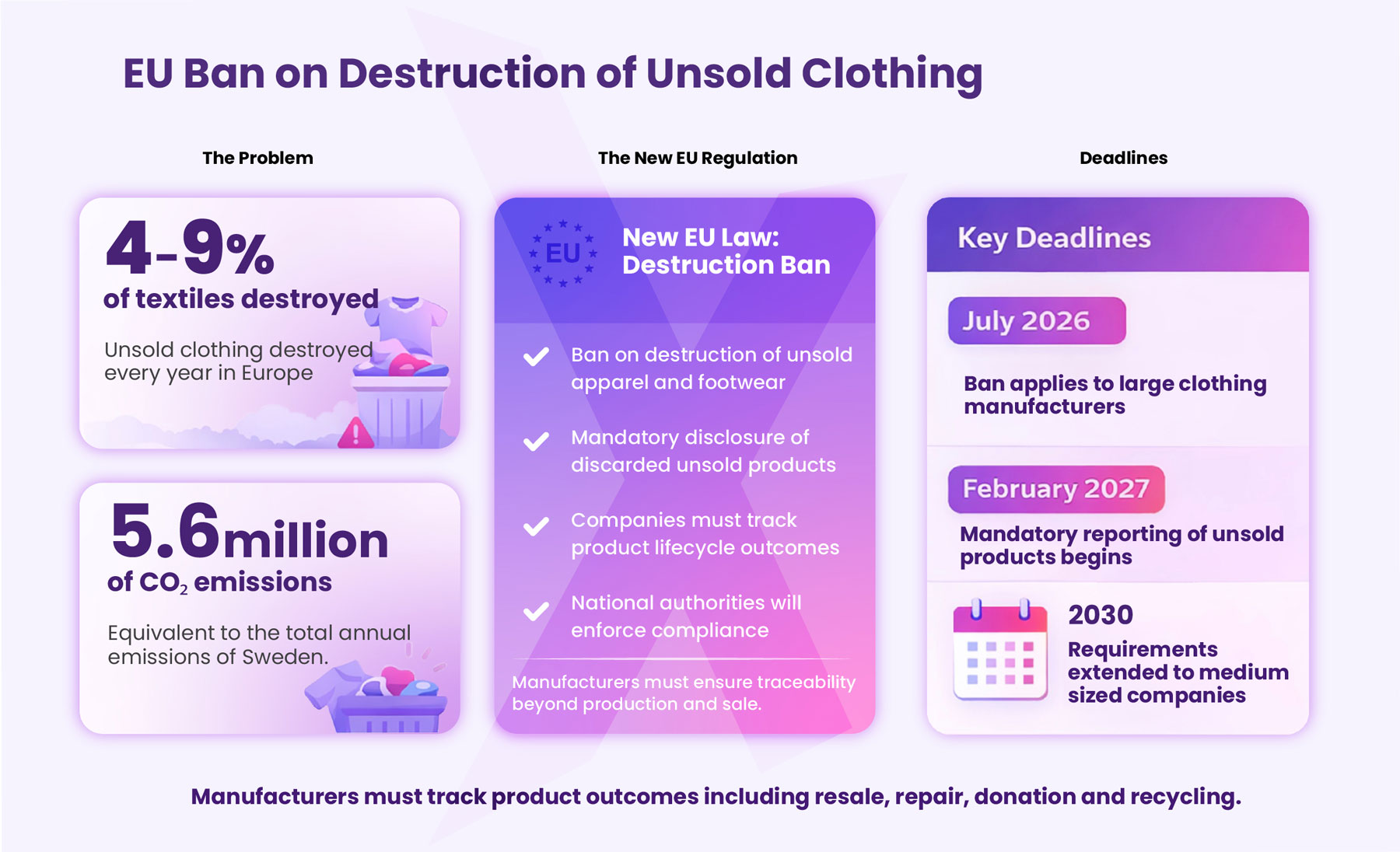
Every year, an estimated 4–9% of unsold textiles in Europe are destroyed before they are worn — a wasteful practice that contributes roughly 5.6 million tonnes of CO₂ emissions annually, nearly equivalent to the total annual emissions of a country like Sweden.
The new rules will help:
- Cut waste by eliminating a common disposal practice.
- Reduce environmental damage from fashion industry emissions.
- Encourage circular business models, such as resale, reuse, remanufacturing, and donation.
What the New ESPR Measures Do
Under the updated rules adopted on 9 February 2026, the regulation introduces two key changes:
Ban on destruction of unsold goods
Large companies will no longer be allowed to intentionally destroy unsold clothing, accessories, or footwear. The ban applies from 19 July 2026 for large companies, with medium-sized firms expected to comply by 2030.Standardised disclosure requirements
Businesses will be required to report how many unsold products are discarded, using a standardised format to improve transparency and compliance. These reporting rules take effect from February 2027.
The Delegated and Implementing Acts adopted today also clarify the very limited circumstances in which destruction may still be allowed — for example, if a product poses a safety risk or is too damaged to be reused. Oversight will be managed by national authorities.
What This Means for Business
Rather than incinerating or sending excess inventory to landfill, companies are being encouraged to:
- Improve stock management and returns processes
- Explore secondary markets and resale platforms
- Invest in remanufacturing and donation channels
- Prioritise circular design and lifecycle strategies
These changes level the playing field between companies already pioneering sustainable and circular business models and those still operating traditional “take-make-dispose” systems.